Leave Your Message

How to Choose a Long Range FPV Drone in 2026?

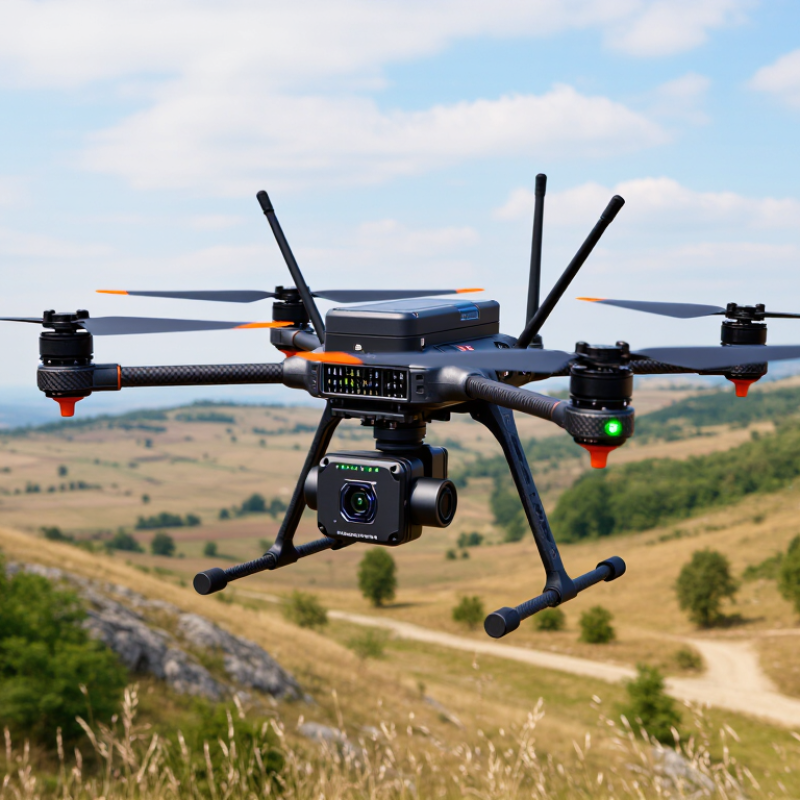
Choosing a Long Range FPV Drone in 2026 requires more than comparing advertised distance. A confident number on a product page may assume calm weather, perfect antennas, and a nearly empty camera feed. Real flights are messier. Wind pushes the frame sideways, voltage drops during climbs, and trees can weaken a signal within seconds.

FPV educator Oscar Liang has repeatedly stressed a practical lesson: “Long range is not just about the battery.” That principle should guide every purchase. A capable Long Range FPV Drone needs an efficient motor and propeller setup, a reliable digital or analog video link, suitable receiver diversity, and a flight controller configured for failsafe behavior. GPS rescue can help, but it should never replace careful piloting or a proper return plan.

This guide examines those decisions through real-world use. We will compare battery capacity, cruising efficiency, antenna placement, frame design, navigation tools, and repairability. We will also consider weight, because extra cells may increase endurance while making the aircraft harder to control. Bigger is not automatically better.

Regulations and local operating requirements matter as well. Pilots should check airspace rules, maintain visual awareness where required, protect people and property, and avoid restricted areas. Long distance should never become an excuse for careless operation.

Some recommendations may feel less exciting than maximum range. That is intentional. A drone that returns reliably, lands with reserve power, and survives a rough field launch is usually more valuable than one that only performs perfectly in a test video. Even experienced pilots misjudge conditions. Your choice should leave room for that mistake.

How to Choose a Long Range FPV Drone in 2026?

Understanding Long-Range FPV Drone Types and Core Features

How to Choose a Long Range FPV Drone in 2026?

Long-range FPV drones are not one single category. Compact long-endurance quadcopters suit pilots who value portability and simpler launching. Larger cruisers carry more battery capacity, cameras, and protective equipment. Fixed-wing FPV aircraft can travel farther, but they need more space and careful recovery planning. Hybrid designs combine vertical takeoff with efficient forward flight. They offer flexibility, though their systems are usually harder to configure and maintain.

Start with the flight purpose, not the advertised distance.

A practical range depends on battery condition, wind, payload, antenna placement, and local regulations. Reliable video transmission matters, but so does stable control telemetry. Look for a clear low-battery warning, dependable return-to-home behavior, and accurate positioning support. Geofencing may help prevent careless flights. Always follow local airspace rules and maintain the required visual awareness.

Weight deserves close attention.

Extra capacity sounds useful. It can also increase landing speed, motor stress, and energy consumption. A durable frame, protected wiring, and accessible replacement parts make regular maintenance less frustrating.

Field experience shows that simple builds are often easier to trust than overloaded ones. Still, no safety system is perfect. Test failsafes in a controlled, legal area before flying farther.

I would also record battery voltage, wind conditions, and control performance after each flight. That log can reveal problems that a single successful flight hides.

Defining Your Flight Range, Environment, and Performance Requirements

How to Choose a Long Range FPV Drone in 2026?

Start by defining what “long range” means for your actual flights. A weekend pilot may need two kilometers across open farmland, not twenty kilometers over remote terrain. Measure the distance between your launch point and the farthest planned turn. Then add a safety margin.

I usually reserve enough battery for a calm return, because wind can quietly double the power demand. A screen showing low voltage is not a good time to reconsider the route.

Your environment matters more than advertised distance. Open fields offer cleaner signals and easier recovery. Trees, hills, buildings, and wet ground can weaken communication quickly.

For coastal flying, salt air and sudden gusts deserve extra attention. In colder weather, batteries may lose performance before the flight even begins.

Choose a reliable control link, accurate navigation support, and a frame that can carry the required battery without becoming sluggish. Heavy equipment may improve endurance, but it can make landing difficult.

Think about performance under imperfect conditions. A drone that flies beautifully in a calm field may struggle in a narrow valley.

Test gradually, record battery use, and inspect footage for signal interruptions. My own planning has sometimes been too optimistic. That is useful feedback, not failure.

Check local aviation rules, stay within permitted operating limits, and avoid flying near people or private property. Respecting privacy and keeping a clear recovery plan matter as much as speed or range.

Comparing Battery Systems, Radio Links, GPS, and Video Transmission

Choosing a long-range FPV drone starts with its battery system, not its advertised distance. Lithium-ion packs offer higher energy density than typical lithium-polymer packs, but they deliver less current during sharp climbs. The IEA’s Global EV Outlook 2024 places modern battery-pack energy density near 150–250 Wh/kg. Treat that as a reference, not a promise. A heavier pack can erase its theoretical advantage. I prefer testing voltage sag, landing reserve, and cell temperature on the actual airframe.

Radio links need a clear design margin. Frequency, antenna placement, receiver sensitivity, and terrain matter more than a headline range figure. The European Telecommunications Standards Institute publishes detailed receiver and spectrum requirements, but real fields remain untidy. Trees, wet ground, and buildings can reduce stability quickly. I use return-to-home GPS as a safety layer, not as a substitute for link planning. GPS.gov reports civilian positioning accuracy of about 7.8 metres or better for 95% of measurements under normal conditions. That sounds precise. It is not precise enough for careless landing decisions.

Video transmission creates another compromise. High-definition images consume bandwidth and can increase delay when compression becomes aggressive. Cisco’s Annual Internet Report projected video would represent 82% of internet traffic by 2022, showing why bandwidth efficiency matters across connected systems. I look for stable bitrate behavior, quick recovery after interference, and readable details near the horizon. Sharp video is useful. A frozen screen is not. My own testing still overvalues peak image quality sometimes, especially in open farmland. Pilots should record latency, packet loss, and usable range in the same weather, not trust laboratory figures alone.

Evaluating Frame Design, Payload Capacity, Safety, and Reliability

How to Choose a Long Range FPV Drone in 2026?

A long-range FPV drone needs a frame designed around efficiency and control. Choose a stiff, lightweight frame with protected electronics and clear cable routes. A seven-inch layout usually offers better propeller efficiency than smaller frames. However, larger arms can amplify vibration. My own test notes often show this overlooked problem. Check motor temperature, vibration, and GPS recovery after every structural change. Keep the takeoff weight low. A practical target is at least a 2:1 thrust-to-weight ratio during testing. Payload capacity should include the battery, camera, mount, and emergency reserve. A drone that carries extra equipment but loses control authority is not genuinely capable.

Safety and reliability deserve equal attention. The FAA’s UAS registration data has reported more than 835,000 registered drones, showing how quickly the operating environment has expanded. EASA’s Annual Safety Review 2024 continues to identify loss of control and human error among recurring safety concerns. Use redundant positioning where supported, test failsafe behavior, and confirm return procedures before flight. Do not trust a published range figure without checking wind, antenna orientation, interference, and battery voltage. Leave a generous reserve. I still find range estimates optimistic in cold weather. Inspect solder joints, battery straps, propellers, and frame cracks before every launch. Keep flights within applicable airspace, visibility, and remote-identification requirements. Reliability is built through repeated checks, not specifications alone.

How to Choose a Long Range FPV Drone in 2026?

Evaluating Frame Design, Payload Capacity, Safety, and Reliability

The chart compares representative long-range FPV frame classes using typical engineering targets: practical flight endurance and useful payload capacity. Larger frames generally offer more battery energy, stronger payload capability, and greater thermal headroom, but they also increase weight, cost, and operational risk.

For safety and reliability, prioritize redundant power distribution, low-voltage failsafes, GPS-assisted return-to-home, adequate motor cooling, vibration control, conservative battery limits, and a frame with enough structural margin for the intended payload. Actual performance varies with battery chemistry, propeller selection, weather, flight speed, and payload configuration.

Selecting Compatible Components and Building a Practical 2026 Setup

How to Choose a Long Range FPV Drone in 2026?

A practical long range FPV setup begins with compatibility, not advertised distance. I match the frame to the battery size, motor spacing, and propeller clearance. A six-inch frame often balances efficiency and control, while larger frames carry more energy but demand stronger arms and careful tuning. Check the motor’s recommended voltage and propeller range. An efficient motor may reduce heat, but it can feel less responsive.

Power planning needs simple arithmetic. Choose an electronic speed controller that handles the motor’s peak current with safety margin. Confirm the battery voltage suits the motors, controller, and video system. I also inspect connector quality and wire length. Short, secure power wires reduce vibration and voltage loss. My first build used an oversized battery. Flight time improved slightly, but the drone became heavy and tiring to control.

The flight controller should offer enough serial ports for the receiver, navigation sensor, and video equipment. Configure return-to-home, low-voltage warnings, and signal-loss behavior before outdoor testing. Test them close to the ground. A reliable GPS position helps, but it is not a substitute for planning. Keep antennas clear of carbon plates and power wiring. Perform a short-range hover test, then extend distance gradually in an open, legal area. Wind changes everything. Always check local aviation rules and maintain visual awareness where required.

How to Choose a Long Range FPV Drone in 2026? - Selecting Compatible Components and Building a Practical 2026 Setup

A practical, brand-neutral component guide for efficient, maintainable and legally compliant long-range FPV builds.

System Area Practical 2026 Target Recommended Specification Compatibility Checks Expected Benefit Common Limitation
Airframe 7-inch or 8-inch long-range frame with protected electronics space 7-inch frame for balanced efficiency; 8-inch frame for heavier payloads and slower cruising Check motor mount pattern, propeller clearance, battery mounting area, GPS placement and total build weight Large propellers produce useful lift efficiently at moderate throttle Larger frames are less agile, more exposed to wind and harder to transport
Propellers Low-pitch, efficient propeller matched to the motor and voltage 7-inch or 8-inch propeller with a moderate pitch, usually in a two-blade or lightweight three-blade design Confirm diameter clearance, motor direction, propeller pitch and the motor manufacturer’s current limit Lower pitch generally reduces cruise current and motor temperature Very low-pitch propellers may provide weaker acceleration and less control authority in wind
Motors Low-to-medium KV motors optimized for 6S operation Approximately 280–380 KV for many 7-inch 6S setups; select the final value from thrust and current data Match motor shaft, mounting pattern, propeller size, battery voltage and electronic speed controller current rating Lower KV reduces unloaded RPM and can improve efficiency with large propellers KV alone does not determine efficiency; stator size, winding, propeller and flight weight also matter
Electronic Speed Controller Four-in-one controller with adequate thermal headroom 6S-rated, low-noise firmware support, approximately 45–60 A continuous rating for a typical 7-inch build Verify battery voltage, motor current, connector type, mounting dimensions, firmware protocol and cooling airflow Individual motor current monitoring and modern digital control improve tuning and fault diagnosis Advertised current ratings vary; sustained heat can reduce the real safe operating margin
Flight Controller Controller with reliable sensor logging and GPS-assisted rescue support F7-class processing is useful for multiple peripherals, but a well-supported F4-class controller can also be sufficient Check UART count, GPS connection, receiver protocol, digital video control, barometer availability and firmware support More available serial ports simplify GPS, receiver, telemetry and peripheral integration Extra features do not replace correct configuration, vibration control or failsafe testing
Battery 6S lithium-ion pack for endurance, or 6S lithium-polymer pack for high power 6S lithium-ion: commonly 3,000–5,000 mAh for efficient cruising; 6S lithium-polymer: commonly 1,500–2,200 mAh for stronger acceleration Confirm cell count, connector polarity, discharge capability, pack dimensions, center of gravity and charger settings Lithium-ion packs usually offer higher energy density; lithium-polymer packs handle peak current better Lithium-ion packs are less suitable for aggressive throttle and must not be over-discharged
Battery Energy Use watt-hours rather than capacity alone to compare packs Nominal energy is approximately nominal voltage × amp-hours; a 6S 4.0 Ah pack is about 88.8 Wh at 22.2 V nominal Compare usable energy after reserving a safety margin; do not rely on the printed capacity as fully usable flight time Energy-based comparison works across different cell counts and pack capacities Real flight time depends on current, wind, temperature, payload, battery age and landing voltage
Video Link Digital or analog system selected according to range, latency and local spectrum rules Use a digitally encrypted link for image quality, or a lightweight analog link for simple long-range redundancy and low weight Match air unit, goggles or monitor, antennas, power input, cooling requirements and regional frequency permissions High-quality video improves orientation and obstacle recognition during distant flight Video range is not guaranteed; antenna placement, interference, terrain and legal transmit-power limits are decisive
Control Link Low-latency link with telemetry, link-quality reporting and tested failsafe behavior A modern spread-spectrum control system with diversity-capable receiver and adequate antenna separation Confirm transmitter and receiver compatibility, firmware region, antenna orientation, telemetry protocol and failsafe action Continuous link-quality data helps the pilot turn back before the control margin becomes unsafe Control range must never be assumed from marketing figures or from video-link performance
Antennas Correctly polarized antennas positioned away from carbon and high-current wiring Use matched-frequency antennas with suitable gain; diversity is helpful when the aircraft changes orientation Match connector type, polarization, frequency band and mounting angle; avoid sharp bends and physical blockage Good placement often improves reliability more than simply increasing transmitter power High-gain antennas can narrow coverage and may be restricted by local regulations
Navigation GNSS receiver with rescue function and reliable position telemetry Use a multi-constellation GNSS module with a clear sky view; add a compass only when wiring and magnetic interference are controlled Provide a dedicated UART, stable regulated power, correct protocol settings and a tested return or rescue altitude Position data supports navigation, recovery and emergency procedures GNSS rescue is not autonomous obstacle avoidance and may fail near buildings, trees or poor satellite visibility
Power Distribution Protected power rails with filtering for sensitive electronics Use regulated outputs appropriate for the flight controller, receiver, GNSS and video unit; include a low-ESR capacitor near the main power input Verify voltage range, current capacity, polarity, grounding, connector security and capacitor voltage rating Clean power reduces electrical noise, video interference and sensor resets Incorrect polarity or an undersized regulator can permanently damage multiple components
Weight Budget Keep the aircraft as light as practical without weakening the frame Typical ready-to-fly 7-inch builds often fall around 700–1,100 g, depending on battery and equipment Measure the complete takeoff mass, calculate thrust-to-weight ratio and check local aircraft weight categories Lower mass improves efficiency, braking, climb performance and emergency landing options A very light build may have less structural durability and less wind resistance
Cruise Planning Fly at a steady throttle with enough reserve for return and landing Many efficient 7-inch builds cruise near 25–45 km/h, but the best speed depends on propeller load, wind and total mass Use measured current logs rather than estimating from hover alone; plan around headwind on the outbound leg Moderate, steady speed generally gives better endurance than repeated acceleration Tailwinds can create misleading range expectations; the return leg may require substantially more power
Range Estimation Calculate a conservative mission distance before flight Usable flight time is based on usable battery capacity ÷ average current; reserve at least 25–30% energy for return and landing Include wind, temperature, battery aging, climb segments, signal margin and the legal operating area A conservative estimate reduces forced landings and battery damage Maximum theoretical range is not a safe operating target
Failsafe Configure and test staged responses for signal loss and low battery Use a controlled emergency action such as rescue, descent or landing only after verifying its behavior in a safe area Test receiver loss, video loss, GPS loss, low voltage, arming prevention and motor-stop settings Predictable behavior limits the consequences of an unexpected link or power problem Failsafe settings can be dangerous if the return altitude, home position or GPS quality is wrong
Thermal Management Provide airflow over the controller, speed controller and video transmitter Keep heat-producing electronics away from enclosed foam or tightly packed battery straps Inspect motor and electronic temperatures after a short high-load test; confirm no component exceeds its rated limit Lower temperatures improve reliability and reduce power-related failures Long-range cruising can hide overheating because the aircraft may appear to fly normally until a component fails
Build Validation Perform staged bench, hover and range tests Validate motor direction, propeller installation, current draw, GPS lock, video stability, telemetry and failsafe before distance flights Use a smoke stopper for initial power-up, secure all wiring and inspect every solder joint and fastener Incremental testing finds compatibility problems before they become recovery situations Bench tests cannot fully reproduce wind, multipath interference or real-world obstacles
Regulatory Planning Operate within the applicable aviation, radio and privacy rules Check registration, pilot qualification, identification, altitude, visual-line-of-sight, frequency and power requirements for the flight location Confirm local rules before selecting transmission settings or planning beyond-visual-line-of-sight operations Legal planning protects people, property and the pilot’s ability to operate responsibly Rules differ by country and may change; technical capability does not create legal permission

Safety note: Performance figures are practical planning ranges rather than guarantees. Always validate the finished aircraft with measured current, temperature, link quality and battery data, and follow the aviation and radio regulations that apply to the operating area.