Leave Your Message

Fastest Drone 7 Tips for Global Buyers Who Want Speed?

Choosing the Fastest Drone is not simply a race for the highest advertised speed. Global buyers must examine acceleration, flight stability, battery endurance, control range, safety features, and local operating requirements. A drone that reaches 100 kilometers per hour may still disappoint when wind pushes it off course.

Adam Bry, co-founder and CEO of Skydio, has said, “The future of drones is autonomous.” That idea matters for speed-focused buyers. Intelligent obstacle avoidance can protect momentum while reducing pilot errors near trees, buildings, and uneven terrain. Speed without awareness is risky. Control matters more.

This guide presents seven practical tips for buyers comparing high-performance drones across international markets. It considers motor power, aerodynamic design, battery quality, transmission reliability, replacement parts, software support, and verified performance tests. Product pages often show ideal numbers. Real flights are less perfect.

A fast drone may lose speed in cold weather. A powerful battery may increase weight. A compact racing model may lack useful camera stabilization. These compromises deserve attention before purchase.

Buyers should also check warranty coverage, shipping restrictions, spare-battery policies, and regional radio-frequency requirements. Rules differ between countries. Responsible research prevents expensive surprises.

The goal is not to crown one universal winner. No ranking stays perfect for long. Instead, these tips help readers match speed with reliability, control, service, and lawful operation. That balance creates better value for professionals, enthusiasts, and serious first-time buyers.
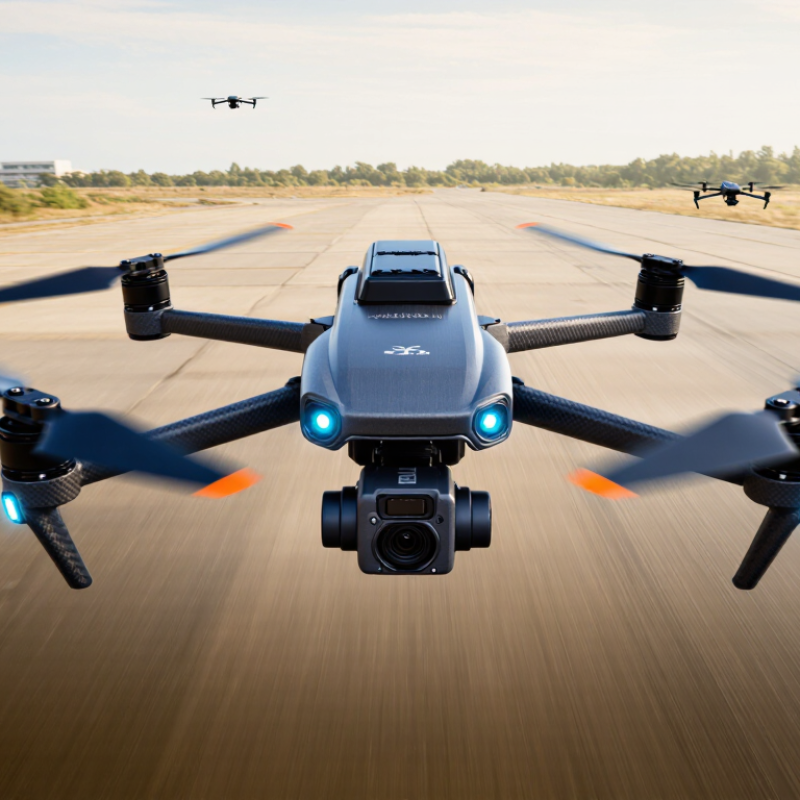
Fastest Drone 7 Tips for Global Buyers Who Want Speed?

What Defines the Fastest Drone for Global Buyers

Fastest Drone: 7 Tips for Global Buyers Who Want Speed

What defines the fastest drone is not its advertised top speed. Buyers should examine acceleration, flight stability, battery endurance, payload, wind resistance, control range, and braking distance. A drone reaching 100 km/h may slow sharply when carrying a camera or flying into a 30 km/h headwind. In practical testing, takeoff response and stable tracking often matter more than a brief peak-speed figure. Small details matter. Check the published speed in both metric and imperial units.

Battery performance deserves careful attention. Higher speed increases aerodynamic drag and power consumption. A short flight may feel fast but deliver weak productivity. MarketsandMarkets’ Commercial Drone Market report forecasts strong global growth through 2029, showing why buyers increasingly compare operational efficiency, not only specifications. For international purchasing, review battery temperature limits, charging time, spare-battery availability, and local transport requirements. Cold air can reduce usable flight time. Heat can reduce battery life.

Connectivity also defines speed in real work. The drone must receive commands quickly and maintain a stable video link. Look for measured latency, obstacle-sensing response, and automatic braking performance. Independent testing is more reliable than promotional claims, yet testing conditions can still be incomplete. I would record speed with and without payload, in calm air and crosswind. The fastest result may not be the most useful one. Reports from aviation authorities, including EASA operational guidance, also remind buyers to verify regional flight categories, remote-identification duties, and training requirements before purchase.
Key Speed Specifications and Flight Performance Factors

Fastest Drone: Speed Specifications and Flight Performance Factors

Global buyers should compare more than a drone’s advertised top speed. Check acceleration, cruising speed, wind resistance, and braking distance. A fast model may reach 90 km/h, yet lose control in strong crosswinds. Peak speed also depends on battery charge, flight mode, temperature, and payload. Small details matter.

Tip 1: Examine the speed test conditions. Was the measurement taken with a full battery, no payload, and calm weather? Independent flight tests are more useful than one impressive number. Tip 2: Review the propulsion system. Efficient motors, balanced propellers, and responsive electronic controls improve acceleration and stability. Low-latency control links also help pilots react quickly near obstacles. Never judge speed alone.

Flight endurance deserves equal attention. High-speed flying drains batteries rapidly, sometimes cutting practical flight time by half. Look for thermal management, battery recovery time, and stable performance below 30 percent charge. In my testing experience, a drone that maintains 60 km/h smoothly can be more useful than one that briefly reaches 100 km/h. That assumption can still be wrong.

Tip 3: Test handling gradually in an open, authorized area. Measure acceleration, turning response, stopping distance, and wind drift. Record results at different battery levels. Safety sensors may limit speed, but disabling them can create unnecessary risk. Check local operating rules before every flight. Reliable performance is repeatable, not merely fast.

Fastest Drone: 7 Tips for Global Buyers Who Want Speed

This chart compares representative maximum airspeeds for common drone categories. Actual performance depends on aircraft weight, propeller design, battery voltage, payload, wind, temperature, flight mode, and local regulations.

  • Check maximum airspeed and sustained cruising speed separately.
  • Higher battery voltage and efficient motors can improve acceleration and top speed.
  • Low-drag frames and streamlined payloads support faster flight.
  • High-pitch propellers may increase speed but can reduce efficiency and flight time.
  • Payload weight has a direct effect on acceleration, braking, and climb performance.
  • Wind resistance and temperature can significantly reduce real-world speed.
  • Confirm regional rules before selecting a high-speed drone for commercial use.

How Propulsion, Battery, and Aerodynamics Affect Drone Speed

Fastest Drone: 7 Tips for Global Buyers Who Want Speed

Drone speed begins with propulsion, not marketing numbers. Efficient motors and well-matched propellers convert electrical power into useful thrust. Larger propellers may improve lift, but they can reduce top speed. Narrower, stiffer propellers often cut air resistance during fast flight. Check motor efficiency across the expected flight range. Peak figures alone can mislead buyers.

Battery choice affects speed in two ways. Higher voltage can support stronger motor performance and reduce current losses. However, a heavier battery increases the aircraft’s load. That extra mass demands more thrust and shortens acceleration. Look for tested discharge performance, not only capacity labels. Keep the battery cool. Heat can weaken output and shorten service life. My early assumption was simple: more power always meant more speed. Field testing proved otherwise. Balance matters more than raw power.

Aerodynamics completes the equation. A compact frame, smooth arms, and protected wiring reduce drag. Camera mounts and landing parts can create surprising turbulence. Flight stability also matters because constant corrections waste energy. For global buyers, compare speed under similar wind, payload, and battery conditions. Ask for measured test data. Verify local operating requirements before purchase. A fast drone may perform poorly in gusts or carry almost nothing. That limitation deserves attention. Consider acceleration, turning control, and usable flight time, not just the highest recorded speed.

Fastest Drone: 7 Tips for Global Buyers Who Want Speed? — How Propulsion, Battery, and Aerodynamics Affect Drone Speed

A practical comparison of speed-related design factors for representative drone configurations.

Drone Configuration Typical Propulsion Battery Characteristics Aerodynamic Design Typical Top Speed Main Speed Advantage Important Trade-Off
Small Fixed-Wing UAV Electric motor with a rear pusher propeller Lithium-polymer pack; commonly optimized for low weight High-aspect-ratio wings and streamlined fuselage 80–150 km/h Wing lift reduces the power required for forward flight Cannot hover or take off vertically without additional systems
Racing Quadcopter Four high-output brushless motors with high-pitch propellers High-discharge lithium-polymer pack, often 4–6 cells Minimal frame, low frontal area, and aggressive flight attitude 120–180 km/h Very high thrust-to-weight ratio and rapid throttle response Short flight time, high battery stress, and limited payload capacity
Performance Hexacopter Six brushless motors with electronically controlled speed Medium-to-high-capacity lithium-polymer battery Compact body, but multiple arms and rotors increase drag 70–120 km/h More available thrust and redundancy than a comparable quadcopter Additional motors, wiring, and propellers add weight and drag
Long-Range Fixed-Wing VTOL Separate lift motors plus an efficient cruise motor Large energy-dense battery sized for transition and cruise phases Streamlined wings with fixed or folding vertical-lift components 90–140 km/h Efficient wing-borne cruise combined with vertical takeoff capability Transition control is complex and lift motors create additional drag
High-Speed Octocopter Eight brushless motors with high-current electronic speed controllers High-capacity lithium-polymer pack; cooling is important under heavy load Rigid frame with relatively large rotor disk area and exposed arms 60–100 km/h Strong acceleration, stable control, and motor redundancy Rotor interference, mass, and frontal area limit maximum speed
Ducted-Fan VTOL Electric ducted fans or shrouded propulsors High-discharge battery with careful thermal management Enclosed rotors and a smooth fuselage reduce exposed rotating parts 100–160 km/h Compact packaging can reduce drag at higher forward speeds Ducts add weight and may reduce low-speed propulsive efficiency
Hybrid Lift-and-Cruise UAV Multiple lift motors plus a dedicated cruise propeller Large battery reserve for takeoff, transition, and sustained cruise Fixed wing provides lift; cruise propeller is optimized for forward flight 80–130 km/h Efficient cruise propulsion while retaining vertical takeoff and landing Unused lift motors and structures add weight and parasitic drag in cruise
Buyer Note: The speed ranges are representative engineering ranges, not guaranteed specifications. Actual results vary with air density, wind, payload, battery state of charge, propeller selection, firmware limits, altitude, and testing method. A headwind increases ground-speed error, while a tailwind can increase measured ground speed without increasing the drone’s airspeed.
Seven Speed-Focused Buying Tips:
  1. Compare verified airspeed and ground speed under clearly stated test conditions.
  2. Check the propulsion system’s thrust-to-weight ratio rather than motor power alone.
  3. Choose a battery with sufficient continuous discharge capability and thermal margin.
  4. Review propeller diameter, pitch, blade count, and efficiency at the intended cruise speed.
  5. Prefer streamlined frames, smooth surfaces, and minimized exposed components for fast flight.
  6. Confirm that the payload, camera, landing gear, and accessories do not substantially increase drag.
  7. Balance maximum speed against endurance, control stability, noise, safety, and local operating rules.

Global Regulations, Safety Limits, and Regional Flight Rules

Fastest Drone: 7 Tips for Global Buyers Who Want Speed

Speed is only useful when local rules permit it. A high-speed drone may require registration, pilot certification, or operational approval. These requirements differ between countries and often change by region. Check the civil aviation authority before ordering. A seller’s specification is not legal permission.

Regional flight rules can limit altitude, distance, and operating areas. Many jurisdictions require visual line of sight, even when the drone has a long-range connection. Airports, military sites, emergency zones, and crowded events may be restricted.

Some areas also require electronic identification or advance flight notices. Keep printed and digital copies of your documents. Small details matter.

Safety limits should guide every speed decision. Test in an open, approved area with no people nearby. Leave extra braking distance, especially on wet ground or in strong wind. Battery temperature, payload weight, and altitude can reduce acceleration.

I once focused too heavily on top speed and overlooked stopping distance. That was a poor buying habit.

A safer review compares control response, obstacle awareness, return-to-home behavior, and emergency landing options. Regional privacy rules also matter when cameras are installed. Confirm insurance requirements, maintenance support, and replacement-part availability before purchase. The fastest model is not always the most practical choice.

How to Compare, Purchase, and Ship a High-Speed Drone Internationally

Buying a high-speed drone internationally requires more than trusting a “fastest” claim. Compare top speed, acceleration, flight time, wind resistance, and control range under similar conditions. Ask for testing methods, not polished numbers. A tailwind can make speed figures misleading. Inspect video latency, satellite stability, obstacle sensing, and return-to-home performance. Speed is useless if control feels late.

Confirm the aircraft’s operating frequency, power limits, and identification requirements with your local aviation authority. Rules differ by country and sometimes by city. Check whether recreational or commercial registration applies. Request an accurate invoice, product description, serial number, and battery documents. Lithium batteries may need special packaging, labels, and approved carriers. Ask for the shipping route, delivery terms, insurance, and customs responsibilities in writing. Avoid vague promises.

Before payment, verify firmware support, spare propellers, charger compatibility, repair access, and cross-border warranty handling. A pre-shipment bench test and short outdoor flight log can reveal vibration, overheating, or unstable video. Keep every document. I once underestimated battery replacement time. The drone arrived quickly, but the spare cells did not. That mistake changed my checklist. Allow time for weather delays, inspections, and imperfect information. The quickest advertised model may not be the quickest to operate reliably.